Case study · Mobile Apps
HabitLoop
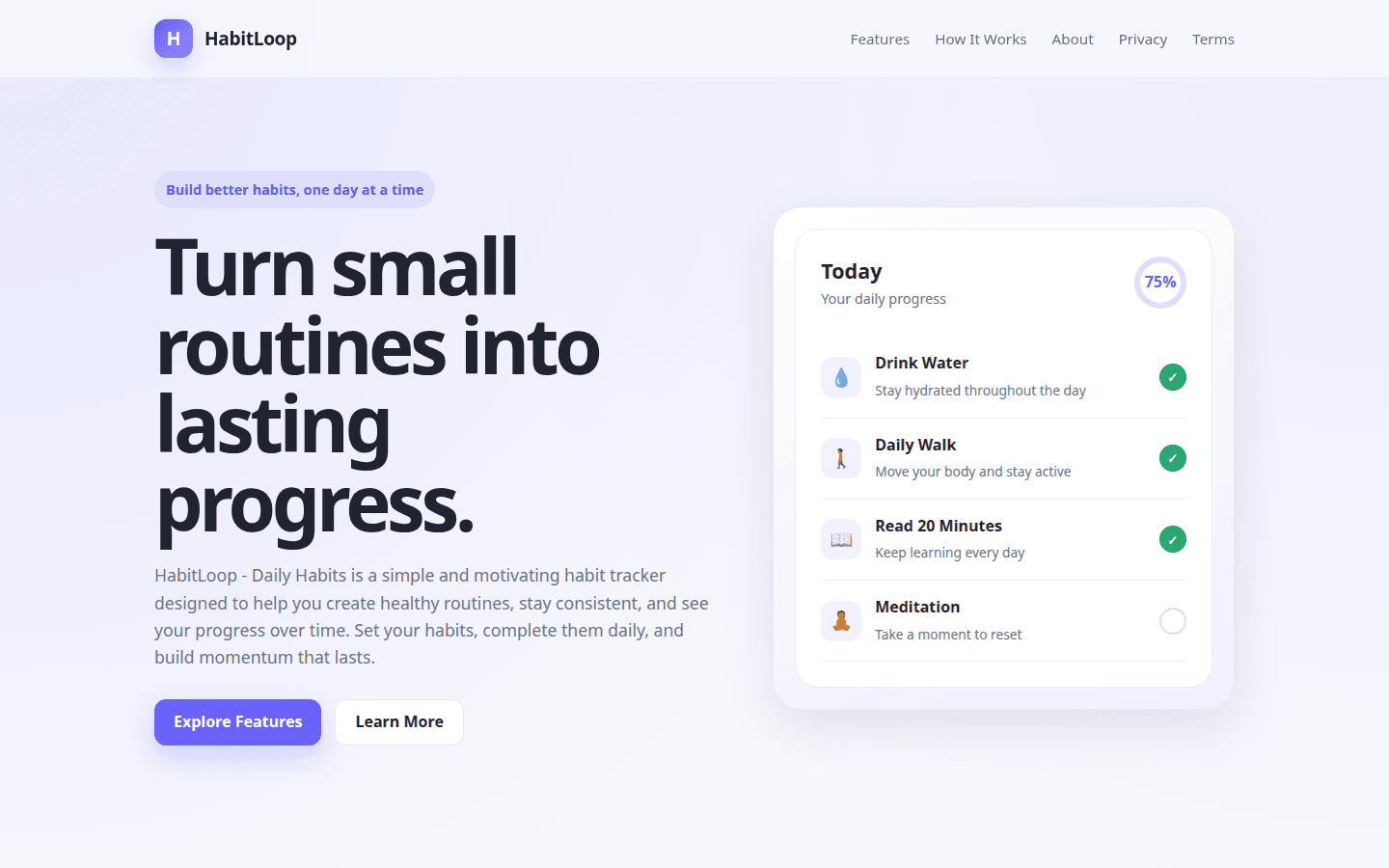
A Flutter habit tracker on Google Play — streaks, reminders, stats and an AI habit coach, working offline first.
- Category
- Mobile Apps
- Role
- Sole developer — design, app, backend and release
- Team
- Solo project
- Duration
- Jul – Sep 2026 · released 17 Sep 2026
- Technologies
01
Overview
HabitLoop – Daily Habits helps people build routines that stick: create habits, check them off each day, keep streaks alive and see progress by day, week, month or year. It works offline from the first launch, syncs when you sign in, and includes an AI habit coach and a premium tier. I designed, built and released it on my own, from the Flutter app through the backend to the Google Play listing.
02
Key features
- Daily habits with schedules, streaks and achievements
- Calendar view of completed, partial and missed days
- Stats by day, week, month and year, with insights
- Reminders and push notifications
- AI Habit Coach with a free allowance
- Premium subscription through Google Play
- Offline guest mode, then email or Google sign-in with sync
- Light, dark and colour themes
Stack
How it’s built
Mobile app
Backend
Services
Offline & quality
03
My contribution
- 01
Flutter app architecture
Built the app with Riverpod, GoRouter and Freezed models behind clear repository and data-source boundaries — 13 feature modules covering habits, calendar, stats, achievements, the AI coach, premium, onboarding, profile and settings.
- 02
Offline-first data
Habits, settings and notifications are cached per user (or guest) in Hive, so the app works from the first launch without an account or a connection, and keeps working if the backend is unreachable.
- 03
Supabase backend
Designed the PostgreSQL schema with Row Level Security on every user table across 12 migrations, plus eight Edge Functions for the AI coach, entitlements, Play purchase verification, billing webhooks, reminders and account deletion.
- 04
AI Habit Coach
The coach answers through a server-side function that calls the Groq API, so no AI key ships in the app. Each user has a request allowance, and chat history is encrypted on the device.
- 05
Subscriptions, ads and notifications
Integrated Google Play Billing with server-side purchase verification, AdMob banners for the free tier, scheduled local reminders with time-zone handling, and Firebase Cloud Messaging for push.
- 06
Release to Google Play
Prepared app signing, the Data safety form, privacy policy and an account-deletion page, tested across an Android device matrix, and ran a pre-release audit with fixes before publishing.
04
Screens
Select an image to view it larger. Arrow keys switch images; Esc closes.
05
Challenges
Challenge
Moving the backend from Firebase to Supabase partway through the build.
How I addressed it
I audited every Firebase dependency first, then moved auth, data, AI quota and billing to Supabase while keeping Firebase only for messaging, Crashlytics and Analytics — documenting the new hybrid architecture as I went.
Challenge
Keeping secrets and paid features safe in a mobile app.
How I addressed it
The app only carries a publishable key. AI keys and service credentials live in Edge Functions, server-owned tables have no client access, and premium status comes from purchases verified with Google Play on the server.
Challenge
Letting people start without an account, then sign in later.
How I addressed it
Guest data is cached locally per user and carried over when they create an account, so nobody loses their streaks at sign-up.
06
Outcome
HabitLoop is live at play.google.com.
- Released on Google Play on 17 September 2026 (version 1.0.0, Android 7.0 and up).
- Covered by 34 Flutter test files, backend contract tests and SQL tests for row-level security.
- Built and shipped solo in about seven weeks, from first commit to store release.
07
What I learned
“Offline-first is a product decision as much as a technical one: when people can start without an account, the app is useful from the very first tap.”
Next project
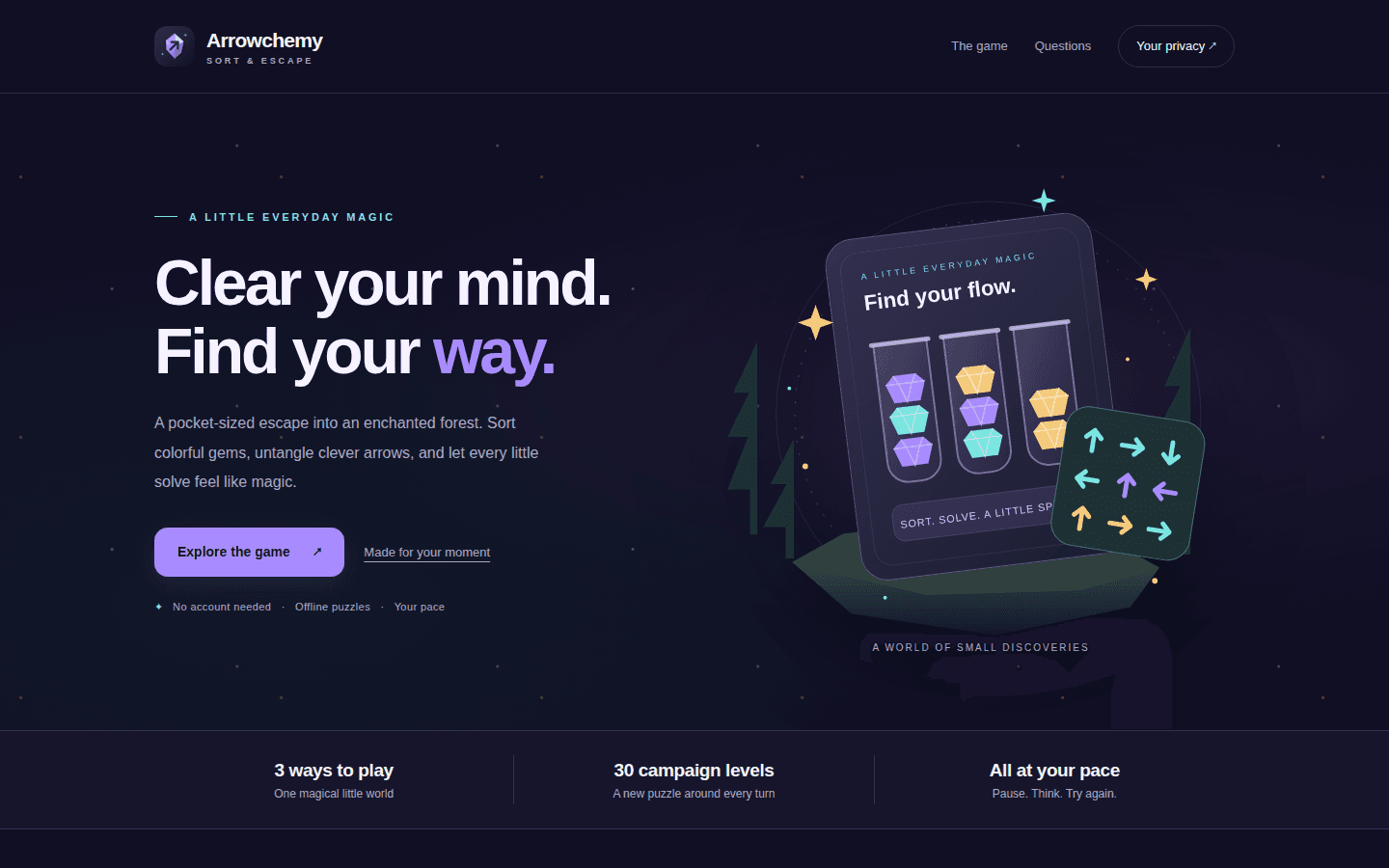
Arrowchemy
An offline Flutter puzzle game — sort gems, untangle arrow mazes and combine both, across 30 solver-verified levels.
Have an idea? Let’s build it.
If a project like this is on your roadmap, I’d be glad to hear about it.